What Australia's first Crisis Communications Boot Camp got right about trust
What Australia's first Crisis Communications Boot Camp got right about trust

A few weeks ago, Australia's first Crisis Communications Boot Camp landed in Sydney, hosted by P World. Having attended the Singapore event as a delegate last year, it was great to see this internationally respected program make its Australian debut and Australia felt ready for it.
Across the two days, a few takeaways stood out.
Takeaway one: the principles haven't changed, but the clock has
Trust, clarity and strong relationships still decide whether a crisis response works. What's changed is speed. AI, misinformation, deepfakes and polarised audiences have compressed the time organisations have to respond, while increasing the complexity of the calls they need to make, a point echoed by speakers from EnergyAustralia, the Metropolitan Police Department of DC and Jetstar and Dubai Airports each describing how internal communications now has to function as an operational tool in real time, not a support function that follows once decisions are made.
Takeaway two: AI is now part of the threat, and the data backs it up
The session on AI-driven disinformation, led by Edelman's Jaskirat Singh Bawa, produced the stat that stopped the room: research from Anthropic, the UK AI Security Institute and the Alan Turing Institute has found that just 250 malicious documents, a fraction of a percent of training data, can poison an AI model regardless of its size. That makes this kind of attack closer to a low-cost blog campaign than a state-sponsored operation.
The counter-data point is just as important: Muck Rack figures show 99% of AI-cited links are non-paid, 84% of citations come from earned media, and journalism and corporate blogs now make up more than half of what AI is "reading" about a brand. The implication for our clients is direct earned media strategy is now, functionally, AI strategy, and organisations that under-invest in it are also under-investing in how they're represented to AI systems.
Takeaway three: measure what actually predicts trust, not activity
Also on day one, former data scientist with LinkedIn Nicole Moreo’s session on crisis measurement pushed back on the next generation of vanity metrics, AI mention counts, chatbot sentiment scores without context, engagement with AI-generated content and offered a simpler test for any metric: does it predict a behaviour or outcome, does it move a business or trust metric, and would it hold up under scrutiny in a real crisis. Worth applying to our own reporting.
Day one closed with a fireside chat with Colleen Harris, former Press Secretary to King Charles III, on managing long-term reputation for one of the world's most scrutinised institutions - a reminder that the discipline looks the same at any scale: consistency of values over the noise of any single moment.
Takeaway four: AI is a tool in the crisis lifecycle, not a replacement for judgement
Day two was given over entirely to a single masterclass: hands-on AI prompting and agent-building, with delegates applying AI to planning, monitoring, stakeholder analysis and messaging while keeping human oversight central. One chart made the point visually: narrative features from five leading AI models clustered tightly together (dubbed "AI Slop"), while human writing sat in a clearly separate space. The lesson for us: AI speeds up the mechanics of a response, but a distinctive human voice is still what makes it credible.
On the panel I moderated
I moderated a panel on the top skills crisis communicators need in an age of polarisation and uncertainty, with perspectives spanning strategic advisory, journalism and advocacy. The strongest thread through that conversation was the same one running through the whole event: communicators lose their value the moment they stop being willing to speak truth to power speed and accuracy under pressure only work if the advice itself is honest, you remain human and respectful.
In the end, it always comes back to trust
AI will keep reshaping our profession and news cycles will keep accelerating. But every crisis is ultimately a breach of trust, and rebuilding it has always been, and will always remain, profoundly human. That's the thing worth carrying back into our own client work from this event, not the tools, but the discipline of staying close enough to a client's reality to earn the right to tell them something hard.
Congratulations to Kosta Petrov, P World and everyone involved in bringing the Crisis Communications Boot Camp to Australia.
This was far more than another industry conference. It was an opportunity for communications professionals to learn from global experts, exchange experiences with peers and challenge how we think about leadership during times of uncertainty.
I have no doubt this will become an important fixture on Australia's communications calendar, and I look forward to seeing it continue to grow in the years ahead.
A few weeks ago, Australia's first Crisis Communications Boot Camp landed in Sydney, hosted by P World. Having attended the Singapore event as a delegate last year, it was great to see this internationally respected program make its Australian debut and Australia felt ready for it.
Across the two days, a few takeaways stood out.
Takeaway one: the principles haven't changed, but the clock has
Trust, clarity and strong relationships still decide whether a crisis response works. What's changed is speed. AI, misinformation, deepfakes and polarised audiences have compressed the time organisations have to respond, while increasing the complexity of the calls they need to make, a point echoed by speakers from EnergyAustralia, the Metropolitan Police Department of DC and Jetstar and Dubai Airports each describing how internal communications now has to function as an operational tool in real time, not a support function that follows once decisions are made.
Takeaway two: AI is now part of the threat, and the data backs it up
The session on AI-driven disinformation, led by Edelman's Jaskirat Singh Bawa, produced the stat that stopped the room: research from Anthropic, the UK AI Security Institute and the Alan Turing Institute has found that just 250 malicious documents, a fraction of a percent of training data, can poison an AI model regardless of its size. That makes this kind of attack closer to a low-cost blog campaign than a state-sponsored operation.
The counter-data point is just as important: Muck Rack figures show 99% of AI-cited links are non-paid, 84% of citations come from earned media, and journalism and corporate blogs now make up more than half of what AI is "reading" about a brand. The implication for our clients is direct earned media strategy is now, functionally, AI strategy, and organisations that under-invest in it are also under-investing in how they're represented to AI systems.
Takeaway three: measure what actually predicts trust, not activity
Also on day one, former data scientist with LinkedIn Nicole Moreo’s session on crisis measurement pushed back on the next generation of vanity metrics, AI mention counts, chatbot sentiment scores without context, engagement with AI-generated content and offered a simpler test for any metric: does it predict a behaviour or outcome, does it move a business or trust metric, and would it hold up under scrutiny in a real crisis. Worth applying to our own reporting.
Day one closed with a fireside chat with Colleen Harris, former Press Secretary to King Charles III, on managing long-term reputation for one of the world's most scrutinised institutions - a reminder that the discipline looks the same at any scale: consistency of values over the noise of any single moment.
Takeaway four: AI is a tool in the crisis lifecycle, not a replacement for judgement
Day two was given over entirely to a single masterclass: hands-on AI prompting and agent-building, with delegates applying AI to planning, monitoring, stakeholder analysis and messaging while keeping human oversight central. One chart made the point visually: narrative features from five leading AI models clustered tightly together (dubbed "AI Slop"), while human writing sat in a clearly separate space. The lesson for us: AI speeds up the mechanics of a response, but a distinctive human voice is still what makes it credible.
On the panel I moderated
I moderated a panel on the top skills crisis communicators need in an age of polarisation and uncertainty, with perspectives spanning strategic advisory, journalism and advocacy. The strongest thread through that conversation was the same one running through the whole event: communicators lose their value the moment they stop being willing to speak truth to power speed and accuracy under pressure only work if the advice itself is honest, you remain human and respectful.
In the end, it always comes back to trust
AI will keep reshaping our profession and news cycles will keep accelerating. But every crisis is ultimately a breach of trust, and rebuilding it has always been, and will always remain, profoundly human. That's the thing worth carrying back into our own client work from this event, not the tools, but the discipline of staying close enough to a client's reality to earn the right to tell them something hard.
Congratulations to Kosta Petrov, P World and everyone involved in bringing the Crisis Communications Boot Camp to Australia.
This was far more than another industry conference. It was an opportunity for communications professionals to learn from global experts, exchange experiences with peers and challenge how we think about leadership during times of uncertainty.
I have no doubt this will become an important fixture on Australia's communications calendar, and I look forward to seeing it continue to grow in the years ahead.
Insights
Written by
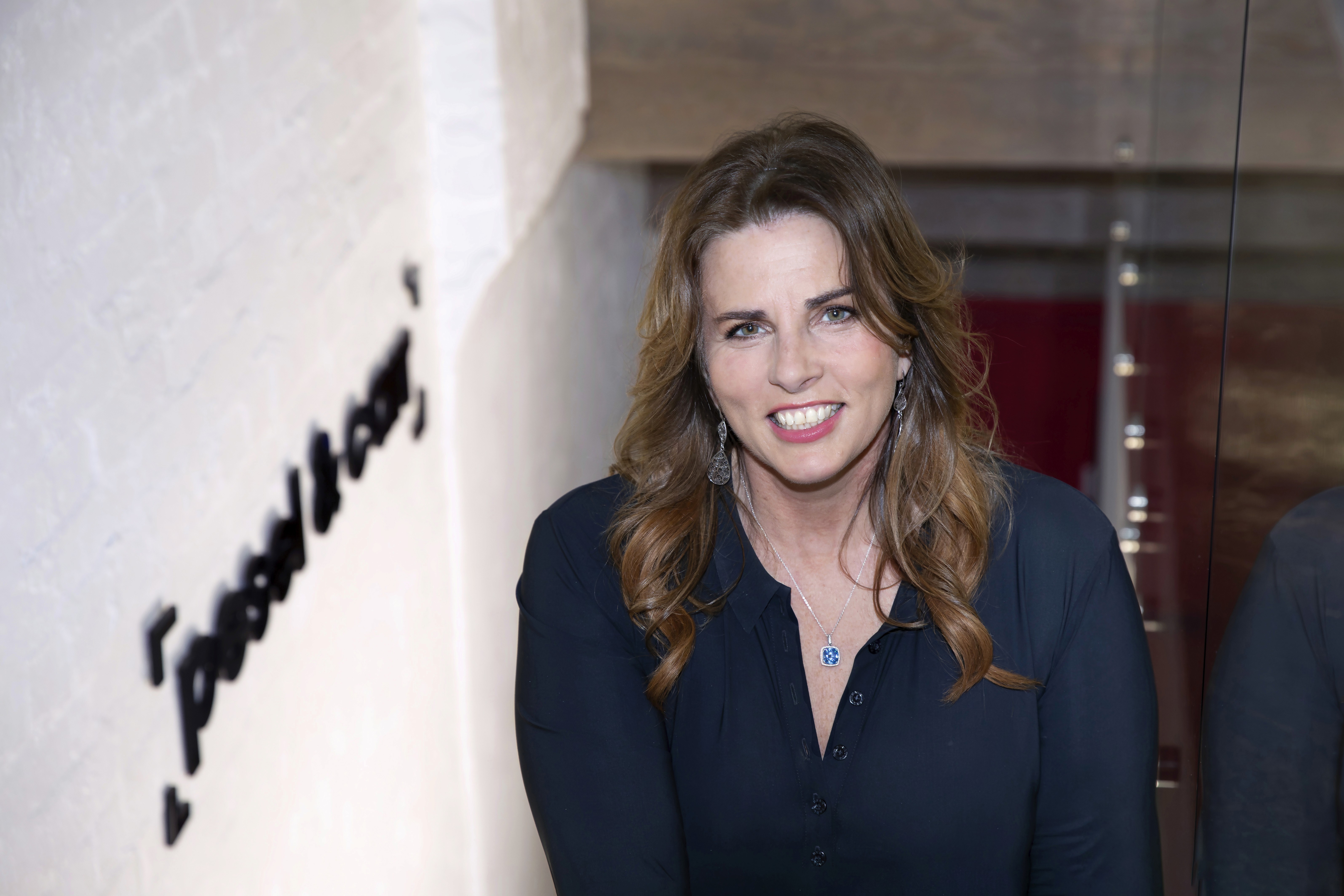
Barbara Pesel
Immediate Past Chair
NEVER MISS A THING!
Subscribe to stay in the loop with all things IABC APAC
Join the newsletter to receive the latest updates in your inbox.
Insights
Written by
Barbara Pesel
Immediate Past Chair
NEVER MISS A THING!
Subscribe to stay in the loop with all things IABC APAC
Join the newsletter to receive the latest updates in your inbox.


The International Association of Business Communicators (IABC) enables a global network of communicators working in diverse industries and disciplines to identify, share, and apply the world’s best communication practices. IABC is recognized as the professional association of choice for communicators who aspire to excel in their chosen fields.
We are part of the International Association of Business Communicators whose global headquarters is located at 330 North Wabash Avenue, Suite 2000 Chicago, Illinois 60611. (www.iabc.com)
The International Association of Business Communicators (IABC) enables a global network of communicators working in diverse industries and disciplines to identify, share, and apply the world’s best communication practices. IABC is recognized as the professional association of choice for communicators who aspire to excel in their chosen fields.
We are part of the International Association of Business Communicators whose global headquarters is located at 330 North Wabash Avenue, Suite 2000 Chicago, Illinois 60611. (www.iabc.com)
The International Association of Business Communicators (IABC) enables a global network of communicators working in diverse industries and disciplines to identify, share, and apply the world’s best communication practices. IABC is recognized as the professional association of choice for communicators who aspire to excel in their chosen fields.
We are part of the International Association of Business Communicators whose global headquarters is located at 330 North Wabash Avenue, Suite 2000 Chicago, Illinois 60611. (www.iabc.com)
Build community
Advance your career
Stay ahead of global trends
IABC connects communication professionals with the people and resources they need to drive business results and support their career.
© 2025 International Association of Business Communicators APAC. All rights reserved.
Build community
Advance your career
Stay ahead of global trends
IABC connects communication professionals with the people and resources they need to drive business results and support their career.
© 2025 International Association of Business Communicators APAC. All rights reserved.
Build community
Advance your career
Stay ahead of global trends
IABC connects communication professionals with the people and resources they need to drive business results and support their career.
© 2025 International Association of Business Communicators APAC. All rights reserved.