Making Accessibility a Reality in Your Communications
Making Accessibility a Reality in Your Communications
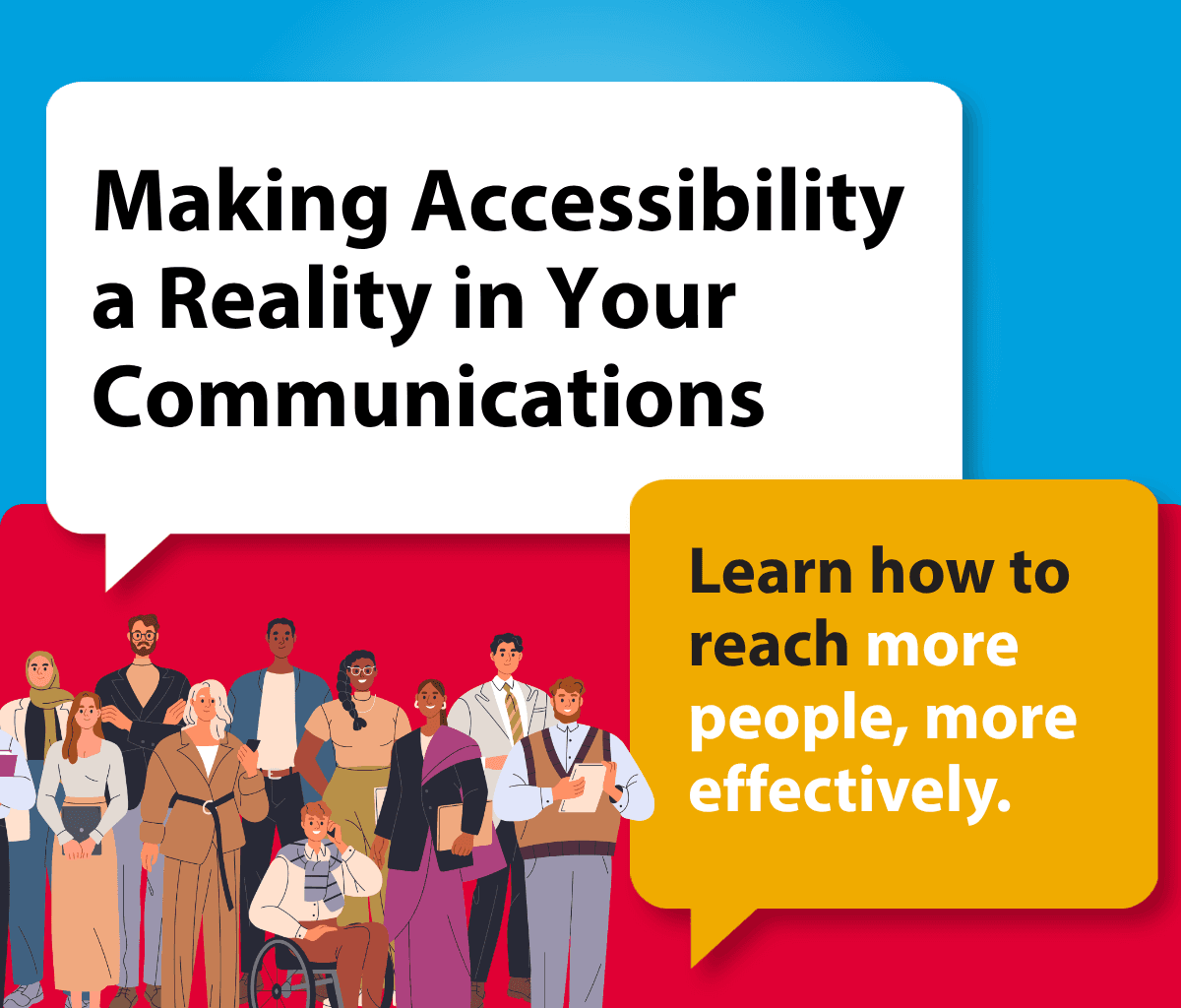
Communication is only effective if it can be accessed and understood. Yet, many of us unintentionally create barriers that exclude people with disabilities. In a recent IABC APAC webinar, experts Matisse Hamel-Nelis and Lisa Riemers explained why accessibility is a strategic imperative and how we can implement it daily.
The Business Case for Inclusion
Accessibility is often viewed as an "edge case," but the numbers tell a different story. Globally, 1 in 6 people experience significant disabilities. In Australia, that number is even higher—over 21% of the population.
By ignoring accessibility, organisations risk losing a share of the $18 trillion (USD) in spending power held by people with disabilities and their networks. Beyond the financial impact, accessible communications build brand reputation, foster trust, and ensure legal compliance with acts like the Australian Disability Discrimination Act.
Getting the Basics Right: The POUR Principles
To meet global standards (specifically WCAG 2.1 Level AA), communications should follow four principles:
Perceivable: Can users see or hear the information?
Operable: Can users navigate the content?
Understandable: Is the language clear and the flow predictable?
Robust: Does the content work with various assistive technologies, both old and new?
Practical Tips for Social Media
Social media is often where accessibility is most neglected. You can make an immediate difference by following these steps:
Use Pascal Case: Capitalise the first letter of each word in hashtags (e.g., #SocialMediaMarketing). This allows screen readers to read the words individually rather than as a jumbled sound.
Be Smart with Emojis: Don't use emojis as bullet points or over-use them. Screen readers read the "alt text" for every single emoji, which can be exhausting for the listener.
Prioritise Contrast: Check your colour contrast. White text on a light background is one of the most common reasons digital content fails accessibility audits.
Writing in Plain Language
Plain language is a right, not a luxury. It means writing so your audience can understand your message the first time they read it. This involves avoiding idioms that don’t translate across cultures and ditching unnecessary jargon.
Progress Over Perfection
The world of technology changes fast, and staying 100% accessible to everyone is a moving target. However, the goal is "progress over perfection." Start by embedding accessibility into your strategy early—not as an afterthought, but as a core part of your creative process.
How are you making your communications more accessible this year?
Find out more
Connect with Matisse Hamel-Nelis & Lisa Riemers on LinkedIn.
Get your copy of Lisa and Matisse's book, Accessible Communications: Create impact, avoid missteps, and build trust.
Communication is only effective if it can be accessed and understood. Yet, many of us unintentionally create barriers that exclude people with disabilities. In a recent IABC APAC webinar, experts Matisse Hamel-Nelis and Lisa Riemers explained why accessibility is a strategic imperative and how we can implement it daily.
The Business Case for Inclusion
Accessibility is often viewed as an "edge case," but the numbers tell a different story. Globally, 1 in 6 people experience significant disabilities. In Australia, that number is even higher—over 21% of the population.
By ignoring accessibility, organisations risk losing a share of the $18 trillion (USD) in spending power held by people with disabilities and their networks. Beyond the financial impact, accessible communications build brand reputation, foster trust, and ensure legal compliance with acts like the Australian Disability Discrimination Act.
Getting the Basics Right: The POUR Principles
To meet global standards (specifically WCAG 2.1 Level AA), communications should follow four principles:
Perceivable: Can users see or hear the information?
Operable: Can users navigate the content?
Understandable: Is the language clear and the flow predictable?
Robust: Does the content work with various assistive technologies, both old and new?
Practical Tips for Social Media
Social media is often where accessibility is most neglected. You can make an immediate difference by following these steps:
Use Pascal Case: Capitalise the first letter of each word in hashtags (e.g., #SocialMediaMarketing). This allows screen readers to read the words individually rather than as a jumbled sound.
Be Smart with Emojis: Don't use emojis as bullet points or over-use them. Screen readers read the "alt text" for every single emoji, which can be exhausting for the listener.
Prioritise Contrast: Check your colour contrast. White text on a light background is one of the most common reasons digital content fails accessibility audits.
Writing in Plain Language
Plain language is a right, not a luxury. It means writing so your audience can understand your message the first time they read it. This involves avoiding idioms that don’t translate across cultures and ditching unnecessary jargon.
Progress Over Perfection
The world of technology changes fast, and staying 100% accessible to everyone is a moving target. However, the goal is "progress over perfection." Start by embedding accessibility into your strategy early—not as an afterthought, but as a core part of your creative process.
How are you making your communications more accessible this year?
Find out more
Connect with Matisse Hamel-Nelis & Lisa Riemers on LinkedIn.
Get your copy of Lisa and Matisse's book, Accessible Communications: Create impact, avoid missteps, and build trust.
Insights
Written by

Melanie Loy SCMP
Brand & Communication Director
NEVER MISS A THING!
Subscribe to stay in the loop with all things IABC APAC
Join the newsletter to receive the latest updates in your inbox.
Insights
Written by
Melanie Loy SCMP
Brand & Communication Director
NEVER MISS A THING!
Subscribe to stay in the loop with all things IABC APAC
Join the newsletter to receive the latest updates in your inbox.


The International Association of Business Communicators (IABC) enables a global network of communicators working in diverse industries and disciplines to identify, share, and apply the world’s best communication practices. IABC is recognized as the professional association of choice for communicators who aspire to excel in their chosen fields.
We are part of the International Association of Business Communicators whose global headquarters is located at 330 North Wabash Avenue, Suite 2000 Chicago, Illinois 60611. (www.iabc.com)
The International Association of Business Communicators (IABC) enables a global network of communicators working in diverse industries and disciplines to identify, share, and apply the world’s best communication practices. IABC is recognized as the professional association of choice for communicators who aspire to excel in their chosen fields.
We are part of the International Association of Business Communicators whose global headquarters is located at 330 North Wabash Avenue, Suite 2000 Chicago, Illinois 60611. (www.iabc.com)
The International Association of Business Communicators (IABC) enables a global network of communicators working in diverse industries and disciplines to identify, share, and apply the world’s best communication practices. IABC is recognized as the professional association of choice for communicators who aspire to excel in their chosen fields.
We are part of the International Association of Business Communicators whose global headquarters is located at 330 North Wabash Avenue, Suite 2000 Chicago, Illinois 60611. (www.iabc.com)
Build community
Advance your career
Stay ahead of global trends
IABC connects communication professionals with the people and resources they need to drive business results and support their career.
© 2025 International Association of Business Communicators APAC. All rights reserved.
Build community
Advance your career
Stay ahead of global trends
IABC connects communication professionals with the people and resources they need to drive business results and support their career.
© 2025 International Association of Business Communicators APAC. All rights reserved.
Build community
Advance your career
Stay ahead of global trends
IABC connects communication professionals with the people and resources they need to drive business results and support their career.
© 2025 International Association of Business Communicators APAC. All rights reserved.