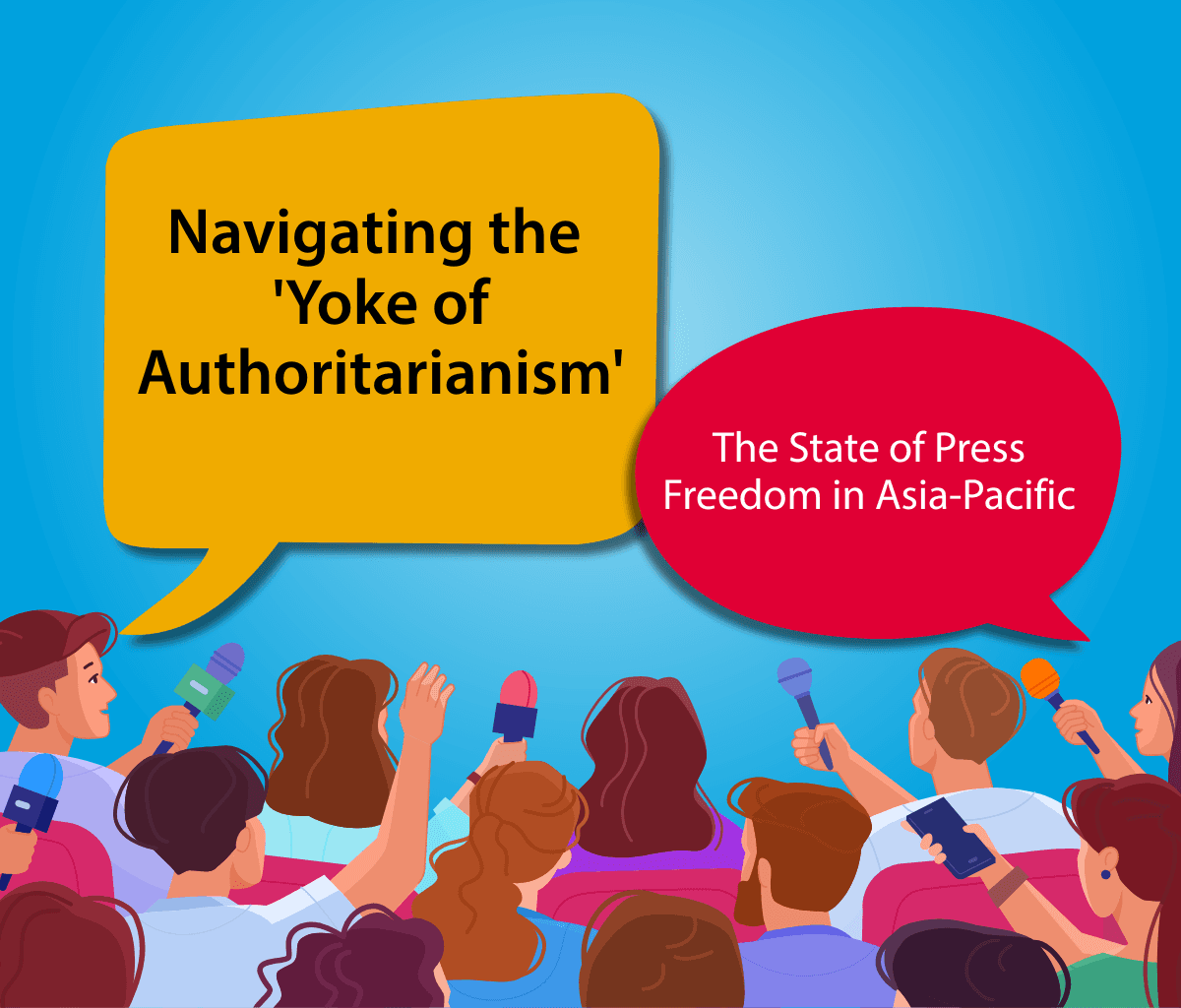
Navigating the 'Yoke of Authoritarianism': The State of Press Freedom in Asia-Pacific
Navigating the 'Yoke of Authoritarianism': The State of Press Freedom in Asia-Pacific
In the world of professional communication, we often speak about the power of narrative, the importance of transparency, and the value of ethical storytelling. However, for many of our colleagues in the Asia-Pacific region, these principles are being tested by increasingly harsh realities.
According to the latest regional analysis by Reporters Without Borders (RSF) and the UNESCO 2025 World Trends Report, the Asia-Pacific continues to be one of the most challenging environments in the world for journalists and media professionals.
A Global and Regional Decline
The data is sobering. UNESCO reports that global freedom of expression has declined by 10% over the past decade, marking the steepest drop since 2012. In the Asia-Pacific, RSF highlights that the region harbours some of the world’s worst offenders. Countries like North Korea, China, and Vietnam exercise absolute state control over information, while Afghanistan has become a "lawless zone" for independent media.
The Rise of the 'Arsenal of Disinformation'
A major insight from the UNESCO report is the "existential crisis" facing media viability. As professional news outlets struggle, the vacuum is being filled by generative AI and social media algorithms that prioritise engagement over accuracy.
RSF warns that this "arsenal of disinformation" is being weaponised by political authorities to manipulate public opinion, particularly during elections. This makes the work of professional communicators more difficult, as the line between fact and state-sponsored fiction becomes dangerously blurred.
Key Insights for Communicators
Drawing from both the RSF and UNESCO reports, several trends emerge that directly impact the communication profession:
Weaponisation of Law: There is an alarming rise in the use of draconian legislation to suppress independent voices.
Safety of Journalists: Threats are escalating, with UNESCO noting that women journalists are being disproportionately targeted by online harassment and physical risks.
Environmental Risks: A specific "Information War" is being waged against environmental journalists and scientists, making transparent sustainability reporting more difficult.
Digital Dominance: Shifting policies of major tech companies have created fertile ground for hate speech, sidelining public-interest journalism.
Why This Matters for Professional Communicators
As communication professionals, we rely on a healthy information ecosystem. When press freedom is curtailed, the quality of public discourse suffers, corporate transparency is weakened, and the "social license" to operate becomes harder to navigate. UNESCO frames information as a "public good." When this good is degraded, it threatens our ability to meet the UN Sustainable Development Goals (SDG 16.10) by 2030.
5 Actions Professional Communicators Can Take to Support Press Freedom
As communication professionals, we have a unique platform to advocate for the integrity of the information landscape. Here are five ways you can take action:
Prioritise Ethical Sourcing: Ensure your organisation’s content and research rely on verified, independent news sources. By citing and sharing work from reputable media outlets, you support their viability and credibility.
Champion Media Literacy: Use your internal and external communication channels to educate stakeholders on how to identify disinformation and "deepfakes." A more discerning audience is a journalist's best ally.
Advocate for Transparency: Encourage your clients and organisations to be proactive and transparent with the media. A culture of openness makes it harder for authoritarian narratives to take root.
Support Media Viability: Where possible, advocate for your organisation to include advertising spend with local, independent, and ethical news publishers rather than relying solely on programmatic social media ads.
Stand in Solidarity: Use your professional network to amplify the work of organizations like RSF and UNESCO. On milestones like World Press Freedom Day (3 May), use your voice to remind your community that a free press is the backbone of a free society.
For more details, explore the Reporters Without Borders (RSF) Regional Analysis and the UNESCO World Trends Report 2022/2025.
In the world of professional communication, we often speak about the power of narrative, the importance of transparency, and the value of ethical storytelling. However, for many of our colleagues in the Asia-Pacific region, these principles are being tested by increasingly harsh realities.
According to the latest regional analysis by Reporters Without Borders (RSF) and the UNESCO 2025 World Trends Report, the Asia-Pacific continues to be one of the most challenging environments in the world for journalists and media professionals.
A Global and Regional Decline
The data is sobering. UNESCO reports that global freedom of expression has declined by 10% over the past decade, marking the steepest drop since 2012. In the Asia-Pacific, RSF highlights that the region harbours some of the world’s worst offenders. Countries like North Korea, China, and Vietnam exercise absolute state control over information, while Afghanistan has become a "lawless zone" for independent media.
The Rise of the 'Arsenal of Disinformation'
A major insight from the UNESCO report is the "existential crisis" facing media viability. As professional news outlets struggle, the vacuum is being filled by generative AI and social media algorithms that prioritise engagement over accuracy.
RSF warns that this "arsenal of disinformation" is being weaponised by political authorities to manipulate public opinion, particularly during elections. This makes the work of professional communicators more difficult, as the line between fact and state-sponsored fiction becomes dangerously blurred.
Key Insights for Communicators
Drawing from both the RSF and UNESCO reports, several trends emerge that directly impact the communication profession:
Weaponisation of Law: There is an alarming rise in the use of draconian legislation to suppress independent voices.
Safety of Journalists: Threats are escalating, with UNESCO noting that women journalists are being disproportionately targeted by online harassment and physical risks.
Environmental Risks: A specific "Information War" is being waged against environmental journalists and scientists, making transparent sustainability reporting more difficult.
Digital Dominance: Shifting policies of major tech companies have created fertile ground for hate speech, sidelining public-interest journalism.
Why This Matters for Professional Communicators
As communication professionals, we rely on a healthy information ecosystem. When press freedom is curtailed, the quality of public discourse suffers, corporate transparency is weakened, and the "social license" to operate becomes harder to navigate. UNESCO frames information as a "public good." When this good is degraded, it threatens our ability to meet the UN Sustainable Development Goals (SDG 16.10) by 2030.
5 Actions Professional Communicators Can Take to Support Press Freedom
As communication professionals, we have a unique platform to advocate for the integrity of the information landscape. Here are five ways you can take action:
Prioritise Ethical Sourcing: Ensure your organisation’s content and research rely on verified, independent news sources. By citing and sharing work from reputable media outlets, you support their viability and credibility.
Champion Media Literacy: Use your internal and external communication channels to educate stakeholders on how to identify disinformation and "deepfakes." A more discerning audience is a journalist's best ally.
Advocate for Transparency: Encourage your clients and organisations to be proactive and transparent with the media. A culture of openness makes it harder for authoritarian narratives to take root.
Support Media Viability: Where possible, advocate for your organisation to include advertising spend with local, independent, and ethical news publishers rather than relying solely on programmatic social media ads.
Stand in Solidarity: Use your professional network to amplify the work of organizations like RSF and UNESCO. On milestones like World Press Freedom Day (3 May), use your voice to remind your community that a free press is the backbone of a free society.
For more details, explore the Reporters Without Borders (RSF) Regional Analysis and the UNESCO World Trends Report 2022/2025.
Insights
Written by

Melanie Loy SCMP
Brand & Communication Director
NEVER MISS A THING!
Subscribe to stay in the loop with all things IABC APAC
Join the newsletter to receive the latest updates in your inbox.
Insights
Written by
Melanie Loy SCMP
Brand & Communication Director
NEVER MISS A THING!
Subscribe to stay in the loop with all things IABC APAC
Join the newsletter to receive the latest updates in your inbox.


The International Association of Business Communicators (IABC) enables a global network of communicators working in diverse industries and disciplines to identify, share, and apply the world’s best communication practices. IABC is recognized as the professional association of choice for communicators who aspire to excel in their chosen fields.
We are part of the International Association of Business Communicators whose global headquarters is located at 330 North Wabash Avenue, Suite 2000 Chicago, Illinois 60611. (www.iabc.com)
The International Association of Business Communicators (IABC) enables a global network of communicators working in diverse industries and disciplines to identify, share, and apply the world’s best communication practices. IABC is recognized as the professional association of choice for communicators who aspire to excel in their chosen fields.
We are part of the International Association of Business Communicators whose global headquarters is located at 330 North Wabash Avenue, Suite 2000 Chicago, Illinois 60611. (www.iabc.com)
The International Association of Business Communicators (IABC) enables a global network of communicators working in diverse industries and disciplines to identify, share, and apply the world’s best communication practices. IABC is recognized as the professional association of choice for communicators who aspire to excel in their chosen fields.
We are part of the International Association of Business Communicators whose global headquarters is located at 330 North Wabash Avenue, Suite 2000 Chicago, Illinois 60611. (www.iabc.com)
Build community
Advance your career
Stay ahead of global trends
IABC connects communication professionals with the people and resources they need to drive business results and support their career.
© 2025 International Association of Business Communicators APAC. All rights reserved.
Build community
Advance your career
Stay ahead of global trends
IABC connects communication professionals with the people and resources they need to drive business results and support their career.
© 2025 International Association of Business Communicators APAC. All rights reserved.
Build community
Advance your career
Stay ahead of global trends
IABC connects communication professionals with the people and resources they need to drive business results and support their career.
© 2025 International Association of Business Communicators APAC. All rights reserved.