
IABC APAC Fusion 2025 Recap: What you learned, or what you missed
IABC APAC Fusion 2025 Recap: What you learned, or what you missed
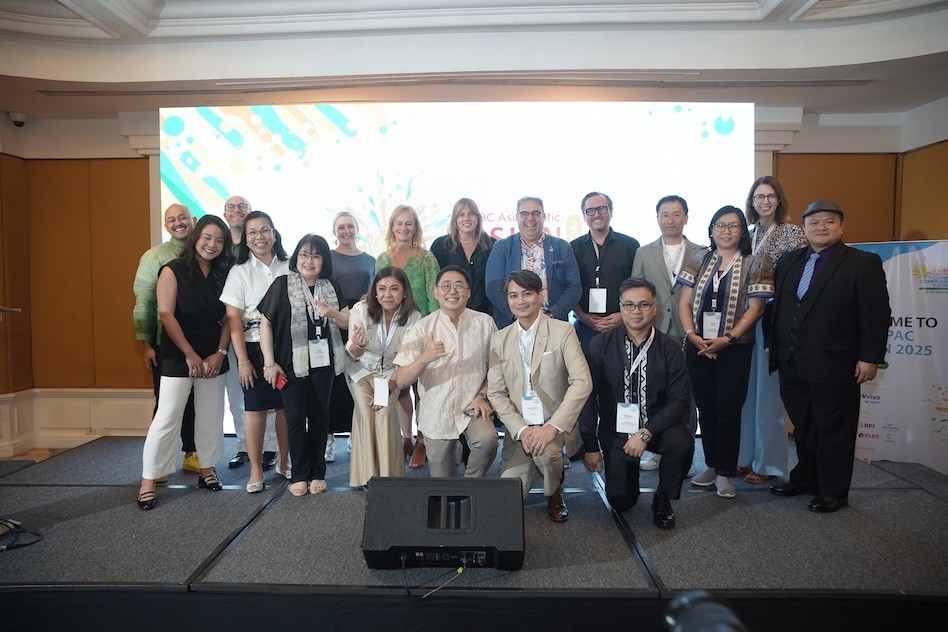
For those who attended the two-day IABC APAC Fusion 2025 in Manila in March this year, it may be the perfect time to revisit the experience and recall the ideas, insights, and useful tips you learned.
After all, the value of an event like Fusion can be summed up in the lessons that you remember and apply. What can you recall? Did you take notes? Did you review those notes? What ideas stuck with you? Did you act on those ideas?
Charlie Munger, the sidekick of billionaire investor Warren Buffet, once shared his prescription for misery, “Learn everything you possibly can from your own experience, minimizing what you learn vicariously from the good and bad experiences of others, living and dead.”
Obviously, vicarious wisdom, which Munger seeks for himself, too, is what we all got from Fusion 2025’s experts who shared their ideas and insights.
So, here again are some takeaways from the speakers:
HELEN BROWN, MANAGING DIRECTOR, BISNIS ASIA
“Navigating the Complexity: Insights into a dynamic Asia-Pacific”
Youth and digital powerhouse
Southeast Asia is home to a young, growing population, making it a dynamic and digitally connected region.
Six interconnected challenges
The region faces six major issues—growth, trade, geopolitics, energy, digital, and education—all deeply linked and increasingly complex in a shifting global landscape.
Culture drives collaboration
Understanding the ASEAN way—rooted in consensus and relationships—is essential for navigating regional complexity and creating meaningful impact.
ZORA ARTIS, GAICD, IABC Fellow, FAMI, SCMP, CPM; CEO Artis Advisory; Co-Founder, The Alignment People
“Building Bridges: Leadership communication to rebuild trust & align culture”
Lead with purpose and sustainability
Effective leaders connect actions to a clear purpose, using storytelling and transparency to drive sustainability-driven impact.
Bridge generations through empathy
Inclusive leadership and active listening foster trust and belonging across diverse, multigenerational teams.
Simplify strategy, inspire action
Clear, intentional communication of strategic goals helps align teams, spark engagement, and turn shared purpose into results.
DR DONALD PATRICK LIM, PRESIDENT & COO DCME HOLDINGS INC.
“The Future of Work & Communications in the World of Web3 and AI”
AI and Web3 are reshaping work and life
AI is accelerating job creation and automation, while Web3 technologies like NFTs and smart contracts are unlocking new use cases across education, property, and public services.
The Philippines is a digital powerhouse
With one of the youngest, most connected populations, the country leads in crypto adoption, social media usage, and NFT ownership—making it a key player in Asia’s digital evolution.
Cybersecurity is a shared responsibility
As cyber risks rise, organizations must adopt a holistic, cross-functional approach that combines technical defenses, employee training, and strong leadership commitment.
ANSHUMAN KUMAR, FORMER DIRECTOR – GLOBAL BRAND & COMMUNICATIONS, INTUIT
“Scaling Corporate Storytelling in the Digital Age”
Empowered employees drive brand culture
Building a culture of trust and shared ownership turns employees into storytellers and change agents who embody and amplify the brand.
Storytelling should be personal and delightful
Using empathy, personalization, and technology-enabled experiences—like AR treasure hunts—can spark deeper emotional engagement and user-generated content.
Let go to scale up
When companies give up control, they empower employees to authentically shape and share the culture, evolving from passive bystanders to active brand catalysts.
SUBHAMOY DAS, PRESIDENT IABC INDIA
“Future Proofing Comms in an AI World: What communicators can do to make themselves future-proof, & what AI tools to use and when”
AI Competence Is No Longer Optional
Communicators must build AI skills now to stay relevant, adaptable, and effective in an evolving digital landscape.
Create a Practical AI Adoption Plan
Build an AI roadmap by assessing readiness, starting small, and integrating tools gradually into existing workflows to improve content creation, planning, and engagement.
The Right Tool for the Right Need
With over 30 AI tools across writing, video, design, and strategy, communicators can match the right tech to the right task—from Jasper.ai to Synthesia.
MARZIA SAGER, COMMUNICATIONS AND ADVANCEMENT LEAD, POWERPLAY YOUNG ENTREPRENEURS; CO-FOUNDER, ALON STUDIO; CO-FOUNDER, GLOW WITHIN FOUNDATION | MAYCKO MACAPUGAS, PRESIDENT IABC BRITISH COLUMBIA
“Strategically Switching Channels: Communicating across generations”
Know your audience, tailor your channel
Different generations prefer different platforms, so communicators must strategically switch channels to build meaningful connections and drive action.
Bridge the gap between communication and engagement
Communication shares meaning, but engagement sparks action—great communicators create both through trust, personalization, and relevance.
Storytelling builds immediate buy-in
Stories grounded in relatability and shared experience help bridge generational divides and encourage faster audience buy-in.
KATE NEILSON, SENIOR EDITOR, HRM MAGAZINE & HRM ONLINE, MAHLAB
“Overcoming Organisational Apathy: Strategies to energise your workforce and prime them to embrace change”
Belonging drives change readiness
Use “belonging communications” to make employees feel like insiders—personalized, clear messaging helps them connect emotionally and engage with change.
Highlight the ‘What’s in It for Me?’
Explain changes in terms of direct employee benefits, anchoring the message in relevance and stability while avoiding corporate jargon.
Assess timing and energy before acting
Successful change depends on external context and emotional bandwidth—don’t push transformation if teams are already stretched.
HEMANT GAULE – DIRECTOR AND CEO, SCORE (INDIA’S ONLY INSTITUTE FOR PUBLIC RELATIONS EDUCATION AND RESEARCH)
“Masterclass: Demystifying AI and empowering you to harness its capabilities”
AI reflects human values
Just like Superman draws from his parents, AI is shaped by our data and moral filters—how we train and guide it determines its impact.
AI supercharges communication
AI enables innovation, scale, customization, and deep audience segmentation, making it a game-changer for communicators.
Future-proofing means practice and process
Treat AI like a partner—experiment, refine, and build strong SOPs to integrate it meaningfully and ethically into your workflow.
MEL LOY, FOUNDER & CEO, HEY MEL! COMMUNICATION & TRAINING
“The Brain & Change: What we can learn from behavioural science when communicating change”
Our brains use shortcuts
In a fast-moving world, people rely on mental shortcuts to make quick decisions—communicators must account for bias and attention limits.
Cut through the noise
With constant information overload, change messages must be clear, timely, and repeated to stick.
Use behavioral science tools
Tactics like co-creation, chunking, social proof, and the curiosity gap can make change communication more engaging and effective.
ANNE WICKHAM, DIRECTOR, BOXING CLEVER
“Why Insights, Not Data, are the Key to Your Project’s Success”
Data isn’t insight
Not all data is helpful—bias, generalizations, and overreliance on demographics can mislead if not critically examined.
Insight comes from curiosity
True insight requires asking good questions, speaking to real people, and digging deeper to find what truly matters to your audience.
Frame strategically, choose channels wisely
Use insights to guide messaging, timing, and platform—framing the right problem at the right moment leads to stronger results.
MICHAEL WEBSTER, CO-FOUNDER & EXECUTIVE CHAIRMAN, TELUM MEDIA
“The Changing APAC Media & Communications Landscape”
APAC is not one market
The region is diverse in language, culture, and media traditions, requiring local insight and tailored strategies—one size does not fit all.
Communicators are taking center stage
The rise of in-house teams, evolving agency roles, and the impact of AI mean communicators now shape both reputation and business strategy.
Media is fragmenting, but story still wins
Despite disruption, strong storytelling, trusted relationships, and local understanding remain key to effective media engagement in APAC.
MYKE SANTOS, FOUNDER & PRINCIPAL CONSULTANT, BRICK MANAGEMENT CONSULTING
“Building Change in a Changing World”
Use the 5 Bricks of Change
To navigate constant change, communicators need Intention, Identity, Focused Action, Connection, and Play to guide people from uncertainty to momentum.
Progress beats perfection
Change is messy—clear next steps and small wins help create movement and avoid paralysis.
Play fuels adaptability
A mindset of curiosity and experimentation keeps teams creative, resilient, and open to new ways of thinking.
MELISSA ARULAPPAN, DIRECTOR COMMUNICATIONS, TARGET
“The Leaky Pipeline In PR – Why Women Are Leaving”
Women dominate PR, but drop off before senior roles
Despite making up 60–66% of the industry, women face career breaks, ageism, and lack of flexibility that block their rise to leadership.
Harassment and lack of support are major barriers
Over half of women report harassment at work, but many don’t report it due to fear of retaliation or inaction—highlighting a systemic failure.
Fixing the pipeline requires collective action
To retain and elevate women, organizations must invest in flexible work, mentorship, inclusive leadership, and genuine allyship.
DAVID HAWKINS, MANAGING DIRECTOR, SOCOM
“Crisis Communications Unpacked”
Start with the goal in mind
Crisis communication should aim to protect operations and reputation, minimizing harm through timely, transparent messaging.
Communicate clearly and honestly
Always share what happened, what you’re doing about it, and what others need to know or do—with empathy and integrity.
Be first, be frequent
In a crisis, speed matters. Communicate as early as possible and keep updating to maintain trust and control the narrative.
CAMERON CRAIG, CEO, A SIGNATURE STORY; FORMER HEAD OF COMMUNICATIONS APPLE & AMAZON
“Storytelling Secrets from Apple”
Clarity is everything
Apple’s comms strategy succeeded by stripping messages down to simple, human, memorable ideas—like “1,000 songs in your pocket.” Simplicity made innovation relatable.
Comms must be strategic and selective
They didn’t chase every outlet or flood the market with releases. Instead, they focused on a few influential voices, delivered only when it mattered, and respected journalists’ time—proving that less is more.
Communicators shape culture and transformation
Apple’s turnaround wasn’t just about products—it was about story. Comms was treated as a leadership function, integrating internal and external narratives to build belief, focus, and momentum from the outside in.
SABRINA AZMI, RESEARCH SOLUTIONS DIRECTOR, CARMA
“Unlocking the Power of Integration: From Metrics to Meaningful Outcomes”
Measure what matters
Go beyond vanity metrics—track outputs, outtakes, and outcomes that align with strategy and reflect real impact.
Link metrics to strategy
Effective measurement connects directly to organizational goals, enabling smarter, data-informed decisions.
Reputation is the ultimate outcome
More than numbers, reputation is the true measure of success—shaped by media, social sentiment, and audience perception.
SHEA EVANS, PRINCIPAL CONSULTANT, A GLASS OF WATER
“Unlocking the Secrets to Staying Authentic with Culturally Diverse Audiences”
Stop, listen, connect
Before communicating, pause with intention, listen to understand, and connect with empathy—not assumptions.
Let body language speak
Authenticity shows physically—through eye contact, posture, nods, and presence, not just words.
Be human
AI can craft content, but real connection requires humanity—know how you feel and what you want your audience to feel.
GURPREET K BHATIA, REGIONAL DIRECTOR COMMUNICATIONS ASIA, HEIFER INTERNATIONAL
“Creating Ripple Effects: How NGO communicators drive global impact through storytelling and partnerships”
Lead with emotionally driven stories
Authentic, character-centered storytelling builds empathy, trust, and action—key to mobilizing support for NGO causes.
Use language that honors dignity
Shift from labels to people-first language that respects participants’ agency and avoids reinforcing harmful stereotypes.
Partner for bigger impact
Strategic collaboration with governments, donors, and media amplifies reach, credibility, and lasting change.
FRANCES L. ARIOLA, HEAD OF CORPORATE COMMMS, ENERGY DEVELOPMENT CORPORATION
“50 Shades of Green: Communicating sustainability in the face of greenwashing”
Authenticity beats optics
Sustainability comms must be rooted in transparency, data, and real action—buzzwords without substance erode trust.
Greenwashing has real costs
Superficial claims can lead to consumer distrust, legal risk, and employee disengagement—credibility is earned, not claimed.
Comms should drive integrity
Communicators aren’t just storytellers—they’re truth seekers who must ensure that sustainability isn’t just said, but done.
FADY RAMZY, ONLINE MARKETING & COMMUNICATIONS STRATEGIST; ADJUNCT FACULTY MEMBER, THE AMERICAN UNIVERSITY IN CAIRO
“Building a Powerful Personal Brand on Linkedin to Unlock Your Opportunities”
Trust is your greatest currency
A strong personal brand is built on visibility, reputation, and thought leadership—earning trust through consistency.
Optimize your profile with purpose
Your LinkedIn profile should be audience-centric, telling a clear, engaging story that highlights value and proof of expertise.
Engage authentically to grow influence
Thoughtful content and meaningful conversations—especially through comments—turn connections into opportunities.
Going back to Charlie Munger. He once said, “There is an old two-part rule that often works wonders in business, science, and elsewhere: 1. Take a simple, basic idea, and 2. Take it very seriously.”
So pick an idea and run with it. And if you want even more ideas, just renew your IABC membership, explore our content and global network, and, of course, attend our next Fusion event.
#
For those who attended the two-day IABC APAC Fusion 2025 in Manila in March this year, it may be the perfect time to revisit the experience and recall the ideas, insights, and useful tips you learned.
After all, the value of an event like Fusion can be summed up in the lessons that you remember and apply. What can you recall? Did you take notes? Did you review those notes? What ideas stuck with you? Did you act on those ideas?
Charlie Munger, the sidekick of billionaire investor Warren Buffet, once shared his prescription for misery, “Learn everything you possibly can from your own experience, minimizing what you learn vicariously from the good and bad experiences of others, living and dead.”
Obviously, vicarious wisdom, which Munger seeks for himself, too, is what we all got from Fusion 2025’s experts who shared their ideas and insights.
So, here again are some takeaways from the speakers:
HELEN BROWN, MANAGING DIRECTOR, BISNIS ASIA
“Navigating the Complexity: Insights into a dynamic Asia-Pacific”
Youth and digital powerhouse
Southeast Asia is home to a young, growing population, making it a dynamic and digitally connected region.
Six interconnected challenges
The region faces six major issues—growth, trade, geopolitics, energy, digital, and education—all deeply linked and increasingly complex in a shifting global landscape.
Culture drives collaboration
Understanding the ASEAN way—rooted in consensus and relationships—is essential for navigating regional complexity and creating meaningful impact.
ZORA ARTIS, GAICD, IABC Fellow, FAMI, SCMP, CPM; CEO Artis Advisory; Co-Founder, The Alignment People
“Building Bridges: Leadership communication to rebuild trust & align culture”
Lead with purpose and sustainability
Effective leaders connect actions to a clear purpose, using storytelling and transparency to drive sustainability-driven impact.
Bridge generations through empathy
Inclusive leadership and active listening foster trust and belonging across diverse, multigenerational teams.
Simplify strategy, inspire action
Clear, intentional communication of strategic goals helps align teams, spark engagement, and turn shared purpose into results.
DR DONALD PATRICK LIM, PRESIDENT & COO DCME HOLDINGS INC.
“The Future of Work & Communications in the World of Web3 and AI”
AI and Web3 are reshaping work and life
AI is accelerating job creation and automation, while Web3 technologies like NFTs and smart contracts are unlocking new use cases across education, property, and public services.
The Philippines is a digital powerhouse
With one of the youngest, most connected populations, the country leads in crypto adoption, social media usage, and NFT ownership—making it a key player in Asia’s digital evolution.
Cybersecurity is a shared responsibility
As cyber risks rise, organizations must adopt a holistic, cross-functional approach that combines technical defenses, employee training, and strong leadership commitment.
ANSHUMAN KUMAR, FORMER DIRECTOR – GLOBAL BRAND & COMMUNICATIONS, INTUIT
“Scaling Corporate Storytelling in the Digital Age”
Empowered employees drive brand culture
Building a culture of trust and shared ownership turns employees into storytellers and change agents who embody and amplify the brand.
Storytelling should be personal and delightful
Using empathy, personalization, and technology-enabled experiences—like AR treasure hunts—can spark deeper emotional engagement and user-generated content.
Let go to scale up
When companies give up control, they empower employees to authentically shape and share the culture, evolving from passive bystanders to active brand catalysts.
SUBHAMOY DAS, PRESIDENT IABC INDIA
“Future Proofing Comms in an AI World: What communicators can do to make themselves future-proof, & what AI tools to use and when”
AI Competence Is No Longer Optional
Communicators must build AI skills now to stay relevant, adaptable, and effective in an evolving digital landscape.
Create a Practical AI Adoption Plan
Build an AI roadmap by assessing readiness, starting small, and integrating tools gradually into existing workflows to improve content creation, planning, and engagement.
The Right Tool for the Right Need
With over 30 AI tools across writing, video, design, and strategy, communicators can match the right tech to the right task—from Jasper.ai to Synthesia.
MARZIA SAGER, COMMUNICATIONS AND ADVANCEMENT LEAD, POWERPLAY YOUNG ENTREPRENEURS; CO-FOUNDER, ALON STUDIO; CO-FOUNDER, GLOW WITHIN FOUNDATION | MAYCKO MACAPUGAS, PRESIDENT IABC BRITISH COLUMBIA
“Strategically Switching Channels: Communicating across generations”
Know your audience, tailor your channel
Different generations prefer different platforms, so communicators must strategically switch channels to build meaningful connections and drive action.
Bridge the gap between communication and engagement
Communication shares meaning, but engagement sparks action—great communicators create both through trust, personalization, and relevance.
Storytelling builds immediate buy-in
Stories grounded in relatability and shared experience help bridge generational divides and encourage faster audience buy-in.
KATE NEILSON, SENIOR EDITOR, HRM MAGAZINE & HRM ONLINE, MAHLAB
“Overcoming Organisational Apathy: Strategies to energise your workforce and prime them to embrace change”
Belonging drives change readiness
Use “belonging communications” to make employees feel like insiders—personalized, clear messaging helps them connect emotionally and engage with change.
Highlight the ‘What’s in It for Me?’
Explain changes in terms of direct employee benefits, anchoring the message in relevance and stability while avoiding corporate jargon.
Assess timing and energy before acting
Successful change depends on external context and emotional bandwidth—don’t push transformation if teams are already stretched.
HEMANT GAULE – DIRECTOR AND CEO, SCORE (INDIA’S ONLY INSTITUTE FOR PUBLIC RELATIONS EDUCATION AND RESEARCH)
“Masterclass: Demystifying AI and empowering you to harness its capabilities”
AI reflects human values
Just like Superman draws from his parents, AI is shaped by our data and moral filters—how we train and guide it determines its impact.
AI supercharges communication
AI enables innovation, scale, customization, and deep audience segmentation, making it a game-changer for communicators.
Future-proofing means practice and process
Treat AI like a partner—experiment, refine, and build strong SOPs to integrate it meaningfully and ethically into your workflow.
MEL LOY, FOUNDER & CEO, HEY MEL! COMMUNICATION & TRAINING
“The Brain & Change: What we can learn from behavioural science when communicating change”
Our brains use shortcuts
In a fast-moving world, people rely on mental shortcuts to make quick decisions—communicators must account for bias and attention limits.
Cut through the noise
With constant information overload, change messages must be clear, timely, and repeated to stick.
Use behavioral science tools
Tactics like co-creation, chunking, social proof, and the curiosity gap can make change communication more engaging and effective.
ANNE WICKHAM, DIRECTOR, BOXING CLEVER
“Why Insights, Not Data, are the Key to Your Project’s Success”
Data isn’t insight
Not all data is helpful—bias, generalizations, and overreliance on demographics can mislead if not critically examined.
Insight comes from curiosity
True insight requires asking good questions, speaking to real people, and digging deeper to find what truly matters to your audience.
Frame strategically, choose channels wisely
Use insights to guide messaging, timing, and platform—framing the right problem at the right moment leads to stronger results.
MICHAEL WEBSTER, CO-FOUNDER & EXECUTIVE CHAIRMAN, TELUM MEDIA
“The Changing APAC Media & Communications Landscape”
APAC is not one market
The region is diverse in language, culture, and media traditions, requiring local insight and tailored strategies—one size does not fit all.
Communicators are taking center stage
The rise of in-house teams, evolving agency roles, and the impact of AI mean communicators now shape both reputation and business strategy.
Media is fragmenting, but story still wins
Despite disruption, strong storytelling, trusted relationships, and local understanding remain key to effective media engagement in APAC.
MYKE SANTOS, FOUNDER & PRINCIPAL CONSULTANT, BRICK MANAGEMENT CONSULTING
“Building Change in a Changing World”
Use the 5 Bricks of Change
To navigate constant change, communicators need Intention, Identity, Focused Action, Connection, and Play to guide people from uncertainty to momentum.
Progress beats perfection
Change is messy—clear next steps and small wins help create movement and avoid paralysis.
Play fuels adaptability
A mindset of curiosity and experimentation keeps teams creative, resilient, and open to new ways of thinking.
MELISSA ARULAPPAN, DIRECTOR COMMUNICATIONS, TARGET
“The Leaky Pipeline In PR – Why Women Are Leaving”
Women dominate PR, but drop off before senior roles
Despite making up 60–66% of the industry, women face career breaks, ageism, and lack of flexibility that block their rise to leadership.
Harassment and lack of support are major barriers
Over half of women report harassment at work, but many don’t report it due to fear of retaliation or inaction—highlighting a systemic failure.
Fixing the pipeline requires collective action
To retain and elevate women, organizations must invest in flexible work, mentorship, inclusive leadership, and genuine allyship.
DAVID HAWKINS, MANAGING DIRECTOR, SOCOM
“Crisis Communications Unpacked”
Start with the goal in mind
Crisis communication should aim to protect operations and reputation, minimizing harm through timely, transparent messaging.
Communicate clearly and honestly
Always share what happened, what you’re doing about it, and what others need to know or do—with empathy and integrity.
Be first, be frequent
In a crisis, speed matters. Communicate as early as possible and keep updating to maintain trust and control the narrative.
CAMERON CRAIG, CEO, A SIGNATURE STORY; FORMER HEAD OF COMMUNICATIONS APPLE & AMAZON
“Storytelling Secrets from Apple”
Clarity is everything
Apple’s comms strategy succeeded by stripping messages down to simple, human, memorable ideas—like “1,000 songs in your pocket.” Simplicity made innovation relatable.
Comms must be strategic and selective
They didn’t chase every outlet or flood the market with releases. Instead, they focused on a few influential voices, delivered only when it mattered, and respected journalists’ time—proving that less is more.
Communicators shape culture and transformation
Apple’s turnaround wasn’t just about products—it was about story. Comms was treated as a leadership function, integrating internal and external narratives to build belief, focus, and momentum from the outside in.
SABRINA AZMI, RESEARCH SOLUTIONS DIRECTOR, CARMA
“Unlocking the Power of Integration: From Metrics to Meaningful Outcomes”
Measure what matters
Go beyond vanity metrics—track outputs, outtakes, and outcomes that align with strategy and reflect real impact.
Link metrics to strategy
Effective measurement connects directly to organizational goals, enabling smarter, data-informed decisions.
Reputation is the ultimate outcome
More than numbers, reputation is the true measure of success—shaped by media, social sentiment, and audience perception.
SHEA EVANS, PRINCIPAL CONSULTANT, A GLASS OF WATER
“Unlocking the Secrets to Staying Authentic with Culturally Diverse Audiences”
Stop, listen, connect
Before communicating, pause with intention, listen to understand, and connect with empathy—not assumptions.
Let body language speak
Authenticity shows physically—through eye contact, posture, nods, and presence, not just words.
Be human
AI can craft content, but real connection requires humanity—know how you feel and what you want your audience to feel.
GURPREET K BHATIA, REGIONAL DIRECTOR COMMUNICATIONS ASIA, HEIFER INTERNATIONAL
“Creating Ripple Effects: How NGO communicators drive global impact through storytelling and partnerships”
Lead with emotionally driven stories
Authentic, character-centered storytelling builds empathy, trust, and action—key to mobilizing support for NGO causes.
Use language that honors dignity
Shift from labels to people-first language that respects participants’ agency and avoids reinforcing harmful stereotypes.
Partner for bigger impact
Strategic collaboration with governments, donors, and media amplifies reach, credibility, and lasting change.
FRANCES L. ARIOLA, HEAD OF CORPORATE COMMMS, ENERGY DEVELOPMENT CORPORATION
“50 Shades of Green: Communicating sustainability in the face of greenwashing”
Authenticity beats optics
Sustainability comms must be rooted in transparency, data, and real action—buzzwords without substance erode trust.
Greenwashing has real costs
Superficial claims can lead to consumer distrust, legal risk, and employee disengagement—credibility is earned, not claimed.
Comms should drive integrity
Communicators aren’t just storytellers—they’re truth seekers who must ensure that sustainability isn’t just said, but done.
FADY RAMZY, ONLINE MARKETING & COMMUNICATIONS STRATEGIST; ADJUNCT FACULTY MEMBER, THE AMERICAN UNIVERSITY IN CAIRO
“Building a Powerful Personal Brand on Linkedin to Unlock Your Opportunities”
Trust is your greatest currency
A strong personal brand is built on visibility, reputation, and thought leadership—earning trust through consistency.
Optimize your profile with purpose
Your LinkedIn profile should be audience-centric, telling a clear, engaging story that highlights value and proof of expertise.
Engage authentically to grow influence
Thoughtful content and meaningful conversations—especially through comments—turn connections into opportunities.
Going back to Charlie Munger. He once said, “There is an old two-part rule that often works wonders in business, science, and elsewhere: 1. Take a simple, basic idea, and 2. Take it very seriously.”
So pick an idea and run with it. And if you want even more ideas, just renew your IABC membership, explore our content and global network, and, of course, attend our next Fusion event.
#
News
Written by

Anthony Alcantara
Brand & Communication Director
NEVER MISS A THING!
Subscribe to stay in the loop with all things IABC APAC
Join the newsletter to receive the latest updates in your inbox.
News
Written by
Anthony Alcantara
Brand & Communication Director
NEVER MISS A THING!
Subscribe to stay in the loop with all things IABC APAC
Join the newsletter to receive the latest updates in your inbox.



The International Association of Business Communicators (IABC) enables a global network of communicators working in diverse industries and disciplines to identify, share, and apply the world’s best communication practices. IABC is recognized as the professional association of choice for communicators who aspire to excel in their chosen fields.
We are part of the International Association of Business Communicators whose global headquarters is located at 330 North Wabash Avenue, Suite 2000 Chicago, Illinois 60611. (www.iabc.com)
The International Association of Business Communicators (IABC) enables a global network of communicators working in diverse industries and disciplines to identify, share, and apply the world’s best communication practices. IABC is recognized as the professional association of choice for communicators who aspire to excel in their chosen fields.
We are part of the International Association of Business Communicators whose global headquarters is located at 330 North Wabash Avenue, Suite 2000 Chicago, Illinois 60611. (www.iabc.com)
The International Association of Business Communicators (IABC) enables a global network of communicators working in diverse industries and disciplines to identify, share, and apply the world’s best communication practices. IABC is recognized as the professional association of choice for communicators who aspire to excel in their chosen fields.
We are part of the International Association of Business Communicators whose global headquarters is located at 330 North Wabash Avenue, Suite 2000 Chicago, Illinois 60611. (www.iabc.com)
Build community
Advance your career
Stay ahead of global trends

IABC connects communication professionals with the people and resources they need to drive business results and support their career.
© 2025 International Association of Business Communicators APAC. All rights reserved.
Build community
Advance your career
Stay ahead of global trends
IABC connects communication professionals with the people and resources they need to drive business results and support their career.
© 2025 International Association of Business Communicators APAC. All rights reserved.
Build community
Advance your career
Stay ahead of global trends
IABC connects communication professionals with the people and resources they need to drive business results and support their career.
© 2025 International Association of Business Communicators APAC. All rights reserved.