Communicating for a Healthier Tomorrow: Insights from the Frontlines
Communicating for a Healthier Tomorrow: Insights from the Frontlines
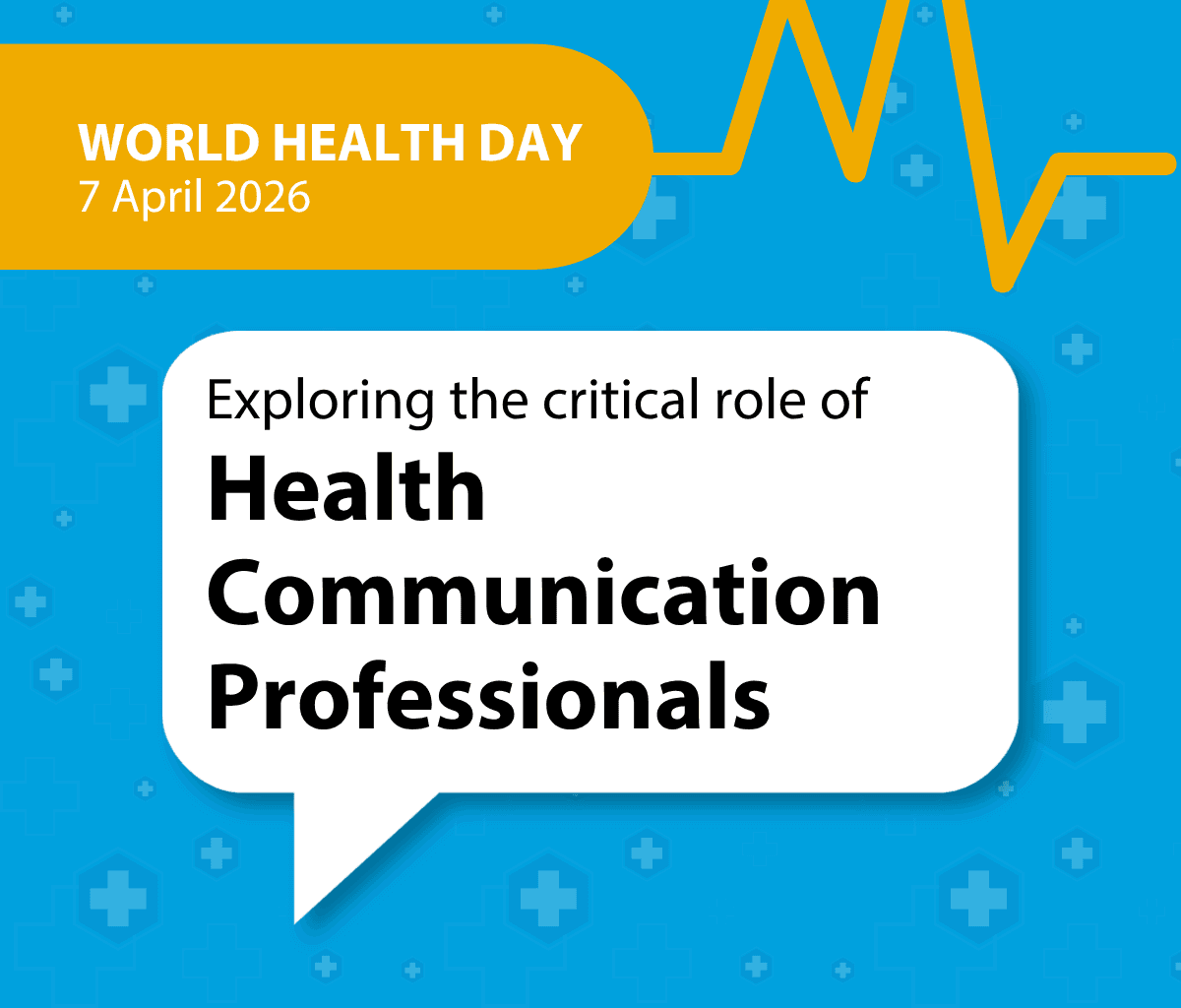
Every year on 7 April, World Health Day marks the anniversary of the founding of the World Health Organization (WHO) in 1948. This year, IABC APAC is celebrating the communicators who serve as the vital link between complex medical science and the communities that depend on it.
To explore the impact of this work, we spoke with three leading practitioners: Bronwyn Adams, Head of Studio STEM; Alicia Nally, Senior Communications Advisor at QIMR Berghofer (Brisbane, Australia); and Aji Muhawarman, Head of Bureau of Communication and Public Information for the Indonesian Ministry of Health.
Healthcare communication is a cornerstone of the global health ecosystem, serving as the primary vehicle for driving healthy behaviours and empowering patients. As the world commemorates the anniversary of the World Health Organization (WHO), regional experts are sharing insights into how strategic storytelling saves lives.
___________________________________________________________
The Heart of the Healthcare Ecosystem
Communication is far more than just sharing information; it is a fundamental driver of public health.
Bronwyn Adams, Head of Studio STEM, says communication is a vital preventative tool. “Communication is a critical part of the healthcare ecosystem. It can help drive healthy behaviours that prevent people from needing to access care, and it empowers consumers to make informed decisions about their health,” Ms Adams said.
Alicia Nally, Senior Communications Advisor at QIMR Berghofer, describes medical research as the “invisible army” behind hospitals. “Healthcare communication is vital to creating an informed community who can advocate for themselves and their family... when a community is confident they understand the quite difficult and sometimes abstract concepts in medical research, they can educate their family and friends,” Ms Nally said.
In Indonesia, where internet penetration is nearly 80%, the challenge is no longer a lack of information, but the distortion of it. Aji Muhawarman, Head of Bureau of Communication and Public Information for the Indonesian Ministry of Health, notes that communication is a decisive success factor for policy.
“Health care communication plays an important role in bridging policy and public action,” Mr Muhawarman said. “It ensures that health programs are not only delivered, but also understood, trusted, and ultimately utilised by the communities they are designed to serve”.
Strategies for Clarity & Trust
The practitioners highlighted several key strategies for translating "inaccessible" raw data into relatable narratives:
The Power of Analogy: Adams suggests using metaphors to paint a vivid picture. “I’ve described different immune cells in the body as post offices and garbage trucks. This comparison immediately gives the audience an understanding of the cell’s function,” she said.
Audience-First Mentality: Nally encourages her team to keep asking, "If you don’t understand it, how will our audience?" until they can confidently state a project’s impact.
Message Simplification: Mr Muhawarman advocates for practical guidance. “Complex health information is translated into simple, practical guidance, focusing on what people need to do and why it matters in their daily lives,” he said. For example, instead of clinical terms for tuberculosis, his team emphasises clear behavioural messages like completing treatment to prevent drug resistance.
Relatability through Storytelling: All three practitioners emphasise the importance of human stories and patient case studies to make projects relatable and illustrate real-world impact.
Real-World Impact
The effectiveness of these strategies is evident in recent regional campaigns:
The "Invisible" Fight: Nally highlights a social media campaign for World Neglected Tropical Disease Day that focused on the basic need for toilets and clean water, resulting in an unprecedented level of donations.
Rapid Response and "Prebunking": In Indonesia, Muhawarman’s team uses real-time social listening to counter misinformation—such as claims that herbal remedies cure TB—with proactive education before hoaxes gain traction.
Distilling Innovation: Adams developed 100-word case studies for the Centre for Biomedical Technologies, using analogies like stem cell "juice" to explain complex tissue repair succinctly.
A Message to the Profession
The experts conclude that quality communication must be institutionalised and respected for its complexity.
“It takes a certain type of person to really want to understand this sort of content and confidently share it with the world for maximum positive effect, so don’t ever think it’s boring or lowly work,” Ms Nally said.
Mr Muhawarman added: “Communication is not separate from health policy—it is one of its most decisive success factors”.
Every year on 7 April, World Health Day marks the anniversary of the founding of the World Health Organization (WHO) in 1948. This year, IABC APAC is celebrating the communicators who serve as the vital link between complex medical science and the communities that depend on it.
To explore the impact of this work, we spoke with three leading practitioners: Bronwyn Adams, Head of Studio STEM; Alicia Nally, Senior Communications Advisor at QIMR Berghofer (Brisbane, Australia); and Aji Muhawarman, Head of Bureau of Communication and Public Information for the Indonesian Ministry of Health.
Healthcare communication is a cornerstone of the global health ecosystem, serving as the primary vehicle for driving healthy behaviours and empowering patients. As the world commemorates the anniversary of the World Health Organization (WHO), regional experts are sharing insights into how strategic storytelling saves lives.
___________________________________________________________
The Heart of the Healthcare Ecosystem
Communication is far more than just sharing information; it is a fundamental driver of public health.
Bronwyn Adams, Head of Studio STEM, says communication is a vital preventative tool. “Communication is a critical part of the healthcare ecosystem. It can help drive healthy behaviours that prevent people from needing to access care, and it empowers consumers to make informed decisions about their health,” Ms Adams said.
Alicia Nally, Senior Communications Advisor at QIMR Berghofer, describes medical research as the “invisible army” behind hospitals. “Healthcare communication is vital to creating an informed community who can advocate for themselves and their family... when a community is confident they understand the quite difficult and sometimes abstract concepts in medical research, they can educate their family and friends,” Ms Nally said.
In Indonesia, where internet penetration is nearly 80%, the challenge is no longer a lack of information, but the distortion of it. Aji Muhawarman, Head of Bureau of Communication and Public Information for the Indonesian Ministry of Health, notes that communication is a decisive success factor for policy.
“Health care communication plays an important role in bridging policy and public action,” Mr Muhawarman said. “It ensures that health programs are not only delivered, but also understood, trusted, and ultimately utilised by the communities they are designed to serve”.
Strategies for Clarity & Trust
The practitioners highlighted several key strategies for translating "inaccessible" raw data into relatable narratives:
The Power of Analogy: Adams suggests using metaphors to paint a vivid picture. “I’ve described different immune cells in the body as post offices and garbage trucks. This comparison immediately gives the audience an understanding of the cell’s function,” she said.
Audience-First Mentality: Nally encourages her team to keep asking, "If you don’t understand it, how will our audience?" until they can confidently state a project’s impact.
Message Simplification: Mr Muhawarman advocates for practical guidance. “Complex health information is translated into simple, practical guidance, focusing on what people need to do and why it matters in their daily lives,” he said. For example, instead of clinical terms for tuberculosis, his team emphasises clear behavioural messages like completing treatment to prevent drug resistance.
Relatability through Storytelling: All three practitioners emphasise the importance of human stories and patient case studies to make projects relatable and illustrate real-world impact.
Real-World Impact
The effectiveness of these strategies is evident in recent regional campaigns:
The "Invisible" Fight: Nally highlights a social media campaign for World Neglected Tropical Disease Day that focused on the basic need for toilets and clean water, resulting in an unprecedented level of donations.
Rapid Response and "Prebunking": In Indonesia, Muhawarman’s team uses real-time social listening to counter misinformation—such as claims that herbal remedies cure TB—with proactive education before hoaxes gain traction.
Distilling Innovation: Adams developed 100-word case studies for the Centre for Biomedical Technologies, using analogies like stem cell "juice" to explain complex tissue repair succinctly.
A Message to the Profession
The experts conclude that quality communication must be institutionalised and respected for its complexity.
“It takes a certain type of person to really want to understand this sort of content and confidently share it with the world for maximum positive effect, so don’t ever think it’s boring or lowly work,” Ms Nally said.
Mr Muhawarman added: “Communication is not separate from health policy—it is one of its most decisive success factors”.
Insights
Written by

Melanie Loy SCMP
Brand & Communication Director
NEVER MISS A THING!
Subscribe to stay in the loop with all things IABC APAC
Join the newsletter to receive the latest updates in your inbox.
Insights
Written by
Melanie Loy SCMP
Brand & Communication Director
NEVER MISS A THING!
Subscribe to stay in the loop with all things IABC APAC
Join the newsletter to receive the latest updates in your inbox.


The International Association of Business Communicators (IABC) enables a global network of communicators working in diverse industries and disciplines to identify, share, and apply the world’s best communication practices. IABC is recognized as the professional association of choice for communicators who aspire to excel in their chosen fields.
We are part of the International Association of Business Communicators whose global headquarters is located at 330 North Wabash Avenue, Suite 2000 Chicago, Illinois 60611. (www.iabc.com)
The International Association of Business Communicators (IABC) enables a global network of communicators working in diverse industries and disciplines to identify, share, and apply the world’s best communication practices. IABC is recognized as the professional association of choice for communicators who aspire to excel in their chosen fields.
We are part of the International Association of Business Communicators whose global headquarters is located at 330 North Wabash Avenue, Suite 2000 Chicago, Illinois 60611. (www.iabc.com)
The International Association of Business Communicators (IABC) enables a global network of communicators working in diverse industries and disciplines to identify, share, and apply the world’s best communication practices. IABC is recognized as the professional association of choice for communicators who aspire to excel in their chosen fields.
We are part of the International Association of Business Communicators whose global headquarters is located at 330 North Wabash Avenue, Suite 2000 Chicago, Illinois 60611. (www.iabc.com)
Build community
Advance your career
Stay ahead of global trends
IABC connects communication professionals with the people and resources they need to drive business results and support their career.
© 2025 International Association of Business Communicators APAC. All rights reserved.
Build community
Advance your career
Stay ahead of global trends
IABC connects communication professionals with the people and resources they need to drive business results and support their career.
© 2025 International Association of Business Communicators APAC. All rights reserved.
Build community
Advance your career
Stay ahead of global trends
IABC connects communication professionals with the people and resources they need to drive business results and support their career.
© 2025 International Association of Business Communicators APAC. All rights reserved.